Frequently Asked Questions
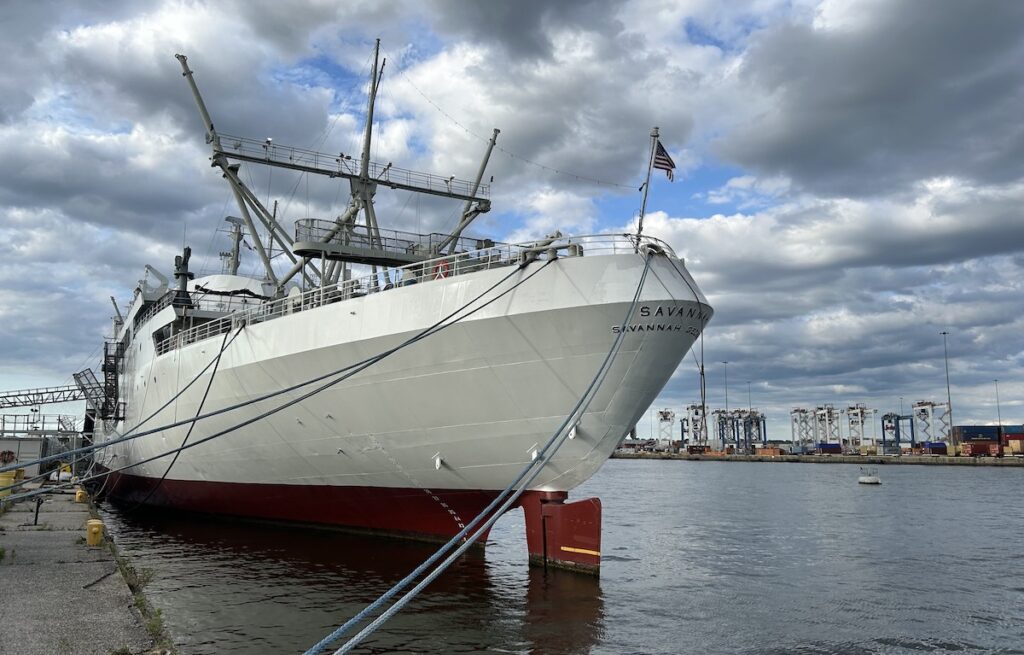
The NS Savannah will probably be disposed of by MARAD around the end of 2026. Due to the ship’s historical significance, it has always been MARAD’s preference to try to find her a good home. For a time it appeared Savannah, Georgia would be the ship’s next home, but that plan no longer appears viable. If MARAD has no other viable destination before the disposal date, NS Savannah will probably be scrapped.
Our intent is to acquire the NS Savannah from MARAD and berth her in the Baltimore area. That is consistent with the maritime heritage of Baltimore and the NS Savannah’s history here. We believe she will complement the existing Baltimore museum and maritime scene. In the longer term (one to two years), we hope to move her to a position in the port that will fully integrate her into the Baltimore maritime scene.
To make this happen a number of things are required:
- We need an appropriate legal structure to hold the ship and solicit significant financial support. FAST was formed with the specific intent of creating this structure.
- We need to find a temporary berth in the Baltimore area, and are investigating several possibilities. Since NS Savannah is a medium-sized ship by today’s standards, more options may be available to us.
- We also need to develop a viable, realistic, long-term funding model to support the ship.
Absolutely. We are engaged with a number of ships in the historic ship community to learn from their experiences. We have a preliminary budget in place that is based on what we have learned. This shows that saving NS Savannah is not a pipe dream – the numbers work out. We are working with the parties in the Baltimore area who we will need to make this happen in this city. We are receiving positive feedback and active, tangible support from those whose help we need.
NS Savannah is unique in that she has been maintained and does not need a significant capital expenditure to open her for business. She has been regularly drydocked, most recently in 2019, and shouldn’t need it again until perhaps 2040. She meets local fire codes and environmental regulations.
We are in discussions with several classes of potential donors. These include individuals, charitable trusts, and corporate members of the maritime and nuclear-energy communities.
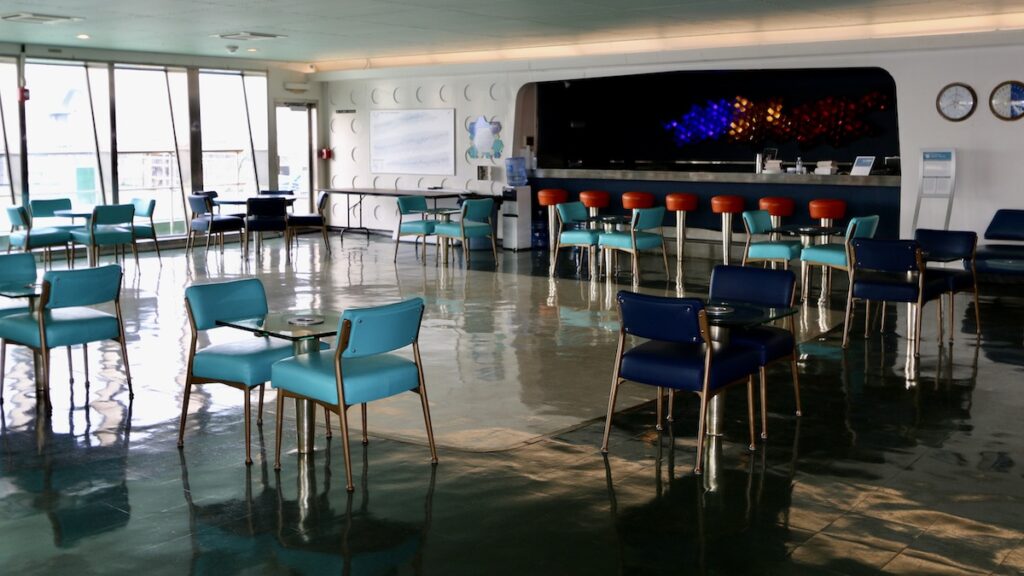
The ship will also generate its own revenue as a museum, event space, and educational facility.
We fully recognize the need to have this revenue stream properly structured for the ship to succeed.
In the short term the Nuclear Ship Savannah Association is soliciting funds through donations to cover the immediate legal and organizational expenses needed to get this effort off the ground. The NSSA is a 501(c)(3) non-profit organization. All members of the organization doing this work are volunteers and receive no compensation.
No. First Atomic Ship Trust, Inc is incorporated as a Maryland non-profit corporation. All members of the organization doing this work are volunteers and receive no compensation.
FAST has applied to the IRS to be recognized as a 501(c)(3) non-profit organization. We expect to be so recognized, although this process will take several months.
FAST has applied to the IRS to be recognized as a 501(c)(3) non-profit organization. We expect to be so recognized, although this process will take several months.
FAST is partnering with the NS Savannah Association. NSSA is a 501(c)(3) that has a long history of supporting the ship through donations and volunteer efforts. Donations can be made at https://www.ns-savannah.com/donate
We are receiving significant support from the Baltimore area and the maritime communities. We are also engaged with the museum ship communities, most notably Project Liberty Ship (with whom we currently share a pier) and the Battleship New Jersey. We are relying on their help, experience, and expertise to make our efforts a success.
NS Savannah has been moored in Baltimore since 2008. During most of that time she was an active industrial site supporting the reactor decommissioning and removal, and was not open to tours. She is also somewhat off the beaten path at Pier 13 in Canton, so it isn’t surprising that many local folks didn’t know about her.
However, over the past few years MARAD, with support from the Nuclear Ship Savannah Association, has been able to open the ship for monthly tours and has hosted thousands of visitors. More than 750 people visited Savannah on National Maritime Day in May 2026, and more than 1,000 visited the ship during Sail250.
The evidence is clear: with a more accessible location in the port and enhanced public awareness, people will come.
Our goal is to preserve the ship. For many reasons, we believe Baltimore and the NS Savannah are a good fit.
Other cities, including Savannah, Charleston, Camden, New York, Galveston, and Bayonne, have been suggested for the ship’s next home. All of these have their pros and cons, but the home port must express an interest in hosting the ship and demonstrate they can do so. Thus far, none of these cities have been able to commit.
Baltimore has a vibrant historic ship collection including the USS Constellation, the SS John Brown, the USS Torsk, the lightship Chesapeake, and USCG Cutter 37. NS Savannah would fit well into this scene.
Not all all. Sadly, the SS United States was gutted internally over the years, had been stripped of artwork and many fittings, had significant damage to wiring and piping, and did not get ongoing maintenance and restoration. Rehabilitation of SS United States would have required extensive repair work before any restoration or re-use could have begun.
In contrast, NS Savannah has been carefully maintained, has had drydocking and hull maintenance, has functioning electrical service and climate control, and still has much of the original decor and fittings on board. Savannah is not only in excellent physical condition, but is very much a floating time capsule and a perfect ready-made museum.
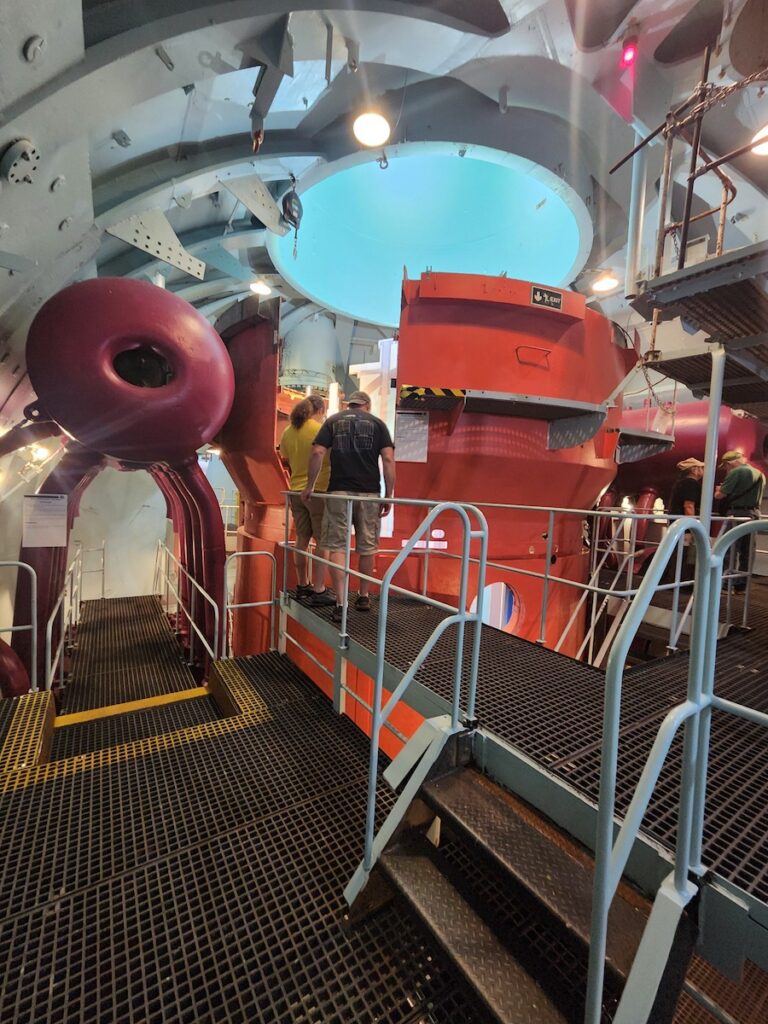
MARAD has been a good steward of the NS Savannah – so much so that they received the 2025 Maryland Preservation Award for Outstanding Stewardship by a Government Agency. Over the past 15 years, the reactor and some associated equipment have been removed in a historically sensitive manner. The propulsion plant has been cleaned and retained. The result is the only pressurized-water reactor in the world that the public can tour.
The ship has been regularly dry-docked, and the hull has been carefully maintained. Savannah is equipped with modern climate control systems, a cathodic protection system for the hull, approved fire systems and everything else needed to be a plug-and-play museum. No initial investment is needed to the ship itself to have her ready for public tours.
The NS Savannah is also a significantly smaller ship than the SS United States, reducing costs and making it easier to find an appropriate berth.